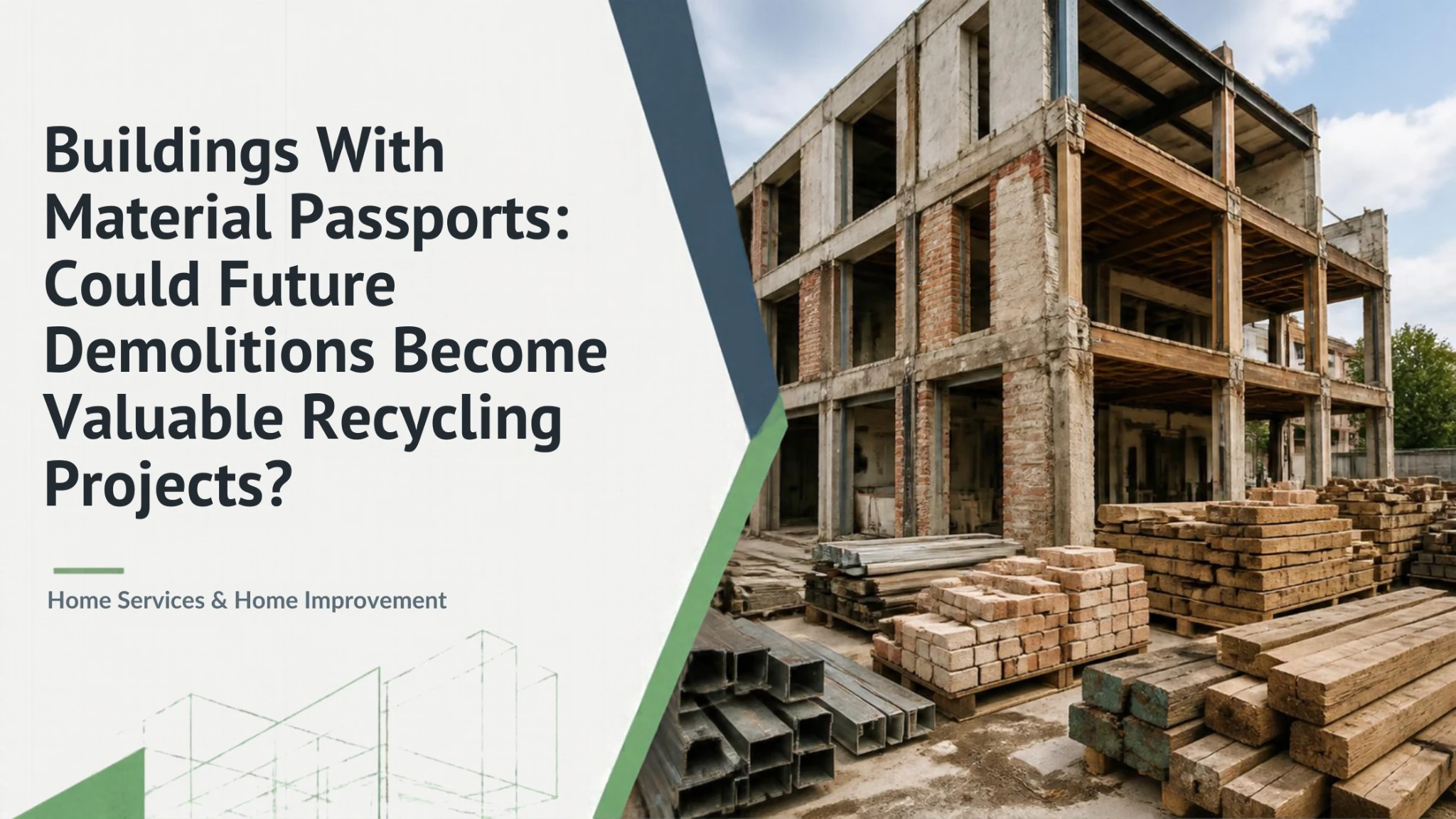
Building demolition has traditionally focused on removing structures, transporting debris, and disposing of unwanted materials. However, material passports are introducing a different approach by identifying valuable resources before buildings reach the end of their useful lives.
A building material passport records information about construction materials, including their composition, location, condition, and potential for reuse. This information can help contractors recover materials instead of treating them as waste. As construction costs rise and environmental requirements evolve, material passports could transform demolition projects into organized material recovery operations that conserve resources and create financial opportunities.
What is a building material passport and how does it work in modern construction?
A building material passport is a digital record containing information about the materials and components used throughout a structure. It helps property owners, architects, contractors, and demolition companies understand what materials exist within a building and how they might be recovered.
Unlike traditional construction documents, which primarily describe how a building was designed and constructed, material passports focus on the long-term use, maintenance, and recovery potential of construction products.
Each passport may contain several categories of information:
- Material identification: The types, quantities, and specifications of construction products.
- Material composition: Information about the substances and components used in manufacturing.
- Installation location: Records showing where individual materials are positioned within a structure.
- Condition and maintenance: Information about repairs, replacements, and material deterioration.
- Reuse potential: Guidance on whether materials can be recovered, refurbished, or recycled.
- Disassembly requirements: Instructions explaining how components can be removed without unnecessary damage.
Modern material passports can connect with Building Information Modeling (BIM) systems. These digital models organize construction information and help professionals identify materials before renovation or demolition begins.
For example, a commercial building may contain reusable steel beams, aluminum window frames, concrete elements, and interior partitions.
With reliable documentation, contractors can identify these components and assess their recovery potential before beginning dismantling work.
Material passports also support the concept of a circular economy, where products and resources remain in use for longer periods rather than following a traditional production-and-disposal cycle.
However, a passport does not automatically certify that a component is safe for reuse. Structural testing, condition assessments, and applicable building requirements remain necessary.
Can material passports reduce construction waste during building demolition?
Material passports can reduce construction waste by helping demolition teams identify recoverable components and plan how to separate them before structural removal begins.
Traditional demolition often relies on mechanical equipment to dismantle buildings quickly. Although this approach can be efficient, it may damage materials that could otherwise be recovered.
According to the U.S. Environmental Protection Agency, approximately 600 million tons of construction and demolition debris were generated in the United States in 2018. Demolition activities accounted for more than 90% of that total.
These figures demonstrate the substantial volume of resources involved in construction waste management.
Material passports offer opportunities to improve recovery through more organized demolition planning.
Identifying reusable components
Contractors can review material records to identify doors, structural steel, fixtures, flooring, and other components that may remain suitable for additional use.
This allows recovery teams to prioritize valuable materials before destructive demolition begins.
Supporting selective dismantling
Selective dismantling, also called deconstruction, involves removing building components in a planned sequence.
Material passports can provide information about connections, material types, and installation methods, potentially reducing unnecessary damage during removal.
Improving material separation
Accurate records help contractors distinguish reusable materials from products requiring recycling or specialized disposal.
This can reduce contamination and improve the quality of recovered resources.
Reducing unnecessary disposal
Materials recovered in usable condition may avoid disposal altogether. Others can enter established recycling processes.
However, successful waste reduction depends on more than documentation.
Contractors must evaluate material condition, contamination, removal costs, transportation requirements, and available recovery facilities.
Material passports are most effective when combined with practical deconstruction strategies and reliable markets for recovered products.

How could reusable building materials change the economics of demolition projects?
Reusable building materials could change demolition economics by turning selected building components into recoverable assets rather than disposal expenses.
Traditional demolition budgets typically include equipment, labor, transportation, safety measures, and waste disposal fees.
A material recovery approach introduces additional activities, including inspections, careful dismantling, sorting, storage, and resale.
Although these activities can increase initial costs, recovered materials may provide financial benefits.
Several economic opportunities deserve consideration.
1. Material resale: Structural steel, architectural fixtures, timber, and reusable equipment may attract buyers when they meet relevant specifications.
2. Lower disposal expenses: Recovering materials can reduce the volume of debris transported to landfills, potentially lowering disposal charges.
3. Reduced demand for new products: Construction projects using suitable reclaimed materials may avoid certain purchasing expenses.
4. Improved project planning: Material documentation can help contractors estimate recovery quantities and identify potential buyers before demolition.
5. New business opportunities: Specialized companies may provide testing, refurbishment, storage, logistics, and material resale services.
However, recovered materials do not automatically generate profits.
A steel beam may have resale potential, but removing it safely, verifying its structural properties, and transporting it to another construction site can be expensive.
Economic outcomes depend on material quality, labor availability, market demand, and the distance between recovery sites and buyers.
Timing also matters. A demolition project may recover valuable materials before buyers are ready to purchase them, creating storage and handling expenses.
Research published in npj Materials Sustainability identifies standardization, material tracking, and stronger reuse systems as important requirements for wider adoption.
Consequently, the economic value of material passports depends on whether documented materials can be recovered and reused at a competitive overall cost.
What prevents construction companies from adopting material passports on a larger scale?
The widespread adoption of material passports faces challenges involving technology, costs, industry coordination, and practical implementation.
Although digital construction tools are becoming more common, many existing buildings lack complete information about their original materials.
This makes creating accurate passports particularly difficult for older structures.
Several barriers continue to limit adoption:
- Incomplete construction records: Older buildings may lack reliable documentation about materials, modifications, and previous repairs.
- Data standardization: Different passport systems may record information using incompatible formats.
- Initial implementation costs: Creating detailed inventories requires software, inspections, technical expertise, and administrative resources.
- Information maintenance: Material records must remain accurate as buildings undergo renovations and replacements.
- Limited resale infrastructure: Some regions lack established marketplaces, testing services, or storage facilities for reclaimed construction products.
- Uncertain financial returns: Contractors may struggle to justify additional documentation expenses without predictable recovery benefits.
A 2025 research review published in Buildings also identified data management, costs, standardization, stakeholder collaboration, and supply chain logistics as significant implementation challenges.
Responsibility for maintaining information presents another complication.
Building owners, architects, contractors, manufacturers, and facility managers may all contribute different information throughout a structure’s lifespan.
Without clear procedures for updating records, material passports can become incomplete or outdated.
Successful adoption therefore requires coordinated industry practices, accessible digital tools, and stronger connections between demolition contractors and recovered-material buyers.
Rethinking What Buildings Leave Behind
Material passports represent a potential shift in how the construction industry understands demolition. Instead of viewing aging buildings exclusively as sources of waste, contractors can evaluate them as collections of materials with possible future applications.
However, realizing this value requires accurate documentation, safe recovery methods, and financially viable reuse opportunities.
Construction companies and property owners considering future renovations or demolition projects can begin by evaluating material inventories and consulting qualified deconstruction specialists. Even limited documentation can help identify components worth recovering.
As material tracking systems improve, demolition planning may increasingly focus not only on removing buildings safely, but also on preserving resources for the structures that come next
Leave a Reply