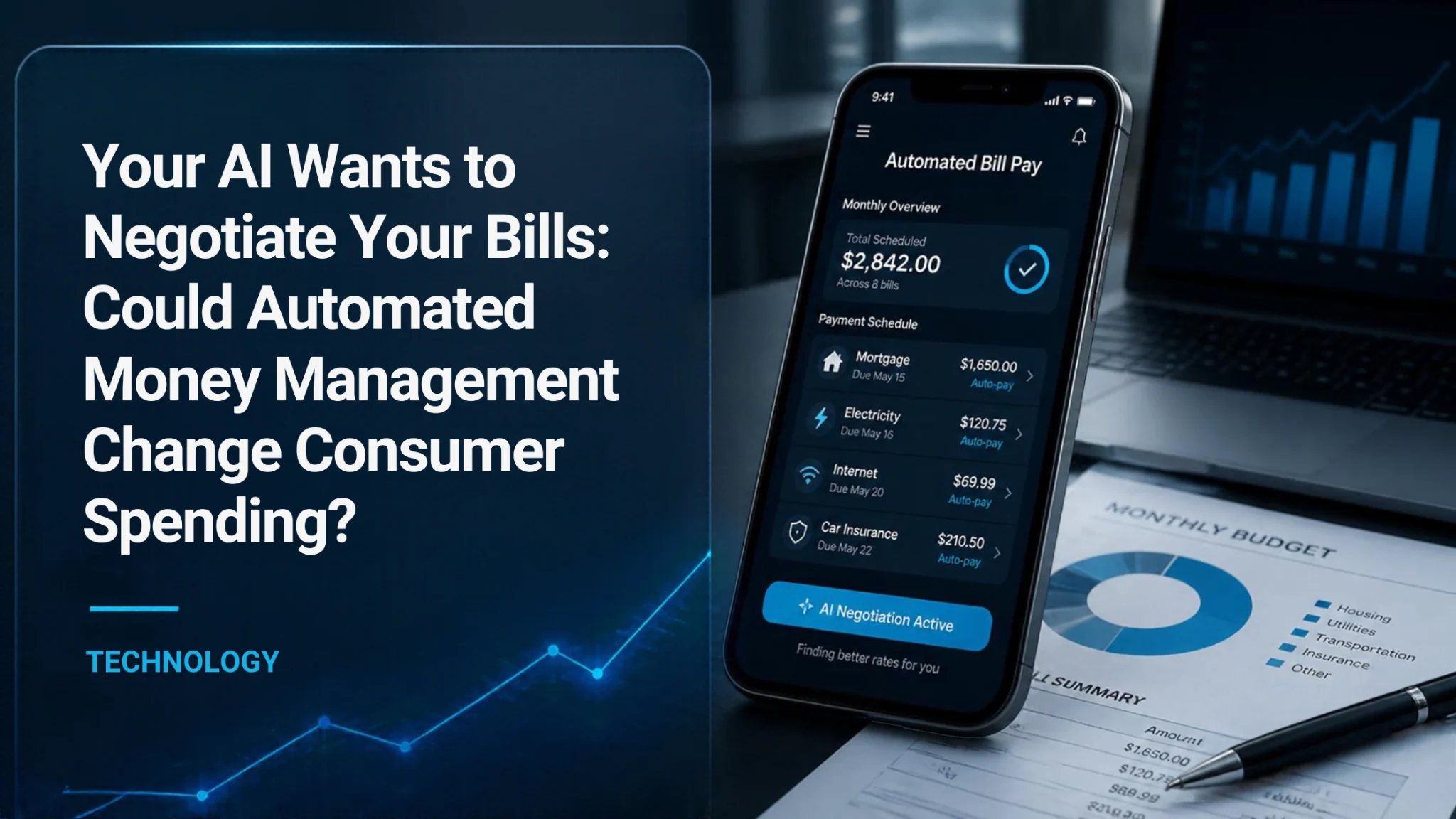
Artificial intelligence is changing how consumers manage household expenses, compare service providers, and identify opportunities to reduce recurring bills. AI-powered financial assistants can analyze spending patterns, identify unnecessary charges, and help consumers negotiate better rates for services such as internet, insurance, and mobile subscriptions.
Traditional money management requires individuals to review statements, contact providers, and compare competing offers. Automated systems could simplify these activities by handling routine financial decisions with limited human involvement. However, giving AI greater control over household finances introduces questions about security, transparency, consumer behavior, and financial responsibility. Understanding these changes is important as automated financial tools become more capable.
Can artificial intelligence negotiate household bills without human involvement?
Artificial intelligence can assist with household bill negotiations by analyzing service costs, identifying competitive offers, and preparing requests for lower rates. Some automated services can also contact providers or manage cancellation requests, depending on their capabilities and the permissions consumers provide.
However, fully independent negotiation remains limited. Many providers require account verification, customer authorization, or direct communication before changing contractual terms.
AI-powered negotiation generally involves several steps.
Reviewing recurring expenses
An automated assistant examines authorized financial records to identify regular payments. These may include internet services, mobile phone plans, streaming subscriptions, insurance premiums, and utility bills.
The system can highlight increases, duplicate subscriptions, or services that appear unusually expensive.
Comparing available alternatives
AI tools can evaluate competing service plans and identify potential savings. Comparisons may consider monthly prices, contract requirements, promotional discounts, and service limitations.
Preparing negotiation requests
The assistant may generate messages requesting lower rates, loyalty discounts, or alternative service packages.
More advanced systems could communicate through supported customer service channels when permitted.
Evaluating proposed agreements
AI can compare an offered discount against the existing contract to determine whether accepting the proposal makes financial sense.
For example, an internet provider might offer a temporary promotional rate that appears attractive but increases significantly after six months.
An automated assistant could identify this condition before recommending acceptance.
Nevertheless, consumers should retain control over contract changes, payment authorizations, and account cancellations. AI can support negotiations, but it cannot guarantee discounts or favorable outcomes.
How could AI-powered financial assistants influence everyday consumer spending?
AI-powered financial assistants could influence consumer spending by making financial information easier to understand and helping households respond to recurring expenses more consistently.
Many consumers underestimate the combined cost of small monthly payments. Streaming services, software subscriptions, cloud storage, and membership programs can gradually consume a significant portion of disposable income.
Automated financial tools can organize these expenses into a clear overview.
Instead of reviewing individual transactions manually, consumers could receive recommendations based on spending patterns, upcoming obligations, and available funds.
Several changes could emerge from wider adoption.
- Improved expense visibility: AI can categorize transactions and identify recurring payments that consumers may overlook.
- Personalized spending recommendations: Financial assistants can suggest adjustments based on established budgets and spending priorities.
- Subscription management: Automated tools can identify unused services and help users review cancellation options.
- Cash flow monitoring: AI can highlight upcoming bills and potential account shortfalls.
- Comparison shopping: Assistants can evaluate prices and contract conditions across competing providers.
These capabilities could reduce the time required to manage routine financial decisions.
However, convenience may also influence spending behavior in unexpected ways.
Consumers who rely heavily on automated recommendations may become less involved in reviewing individual purchases. They might accept suggested service changes without fully understanding contractual conditions.
Financial assistants could also influence which products consumers discover. If an AI system prioritizes providers based on commercial partnerships rather than overall value, recommendations may not reflect the consumer’s best interests.
Transparency is therefore essential.
Consumers should understand how recommendations are generated, whether providers compensate the platform, and which decisions require explicit approval.
Automated money management works best when it strengthens financial awareness rather than replacing independent judgment.
What financial risks arise when automated systems manage recurring payments?
Automated financial management introduces risks involving data security, payment accuracy, unauthorized transactions, and excessive reliance on technology.
Financial assistants may require access to bank accounts, billing statements, and payment information. This creates privacy concerns, particularly when sensitive financial records are processed by third-party platforms.
Several risks deserve attention:
- Unauthorized transactions: Weak permission controls could allow unwanted payments or account changes.
- Incorrect recommendations: AI may misunderstand billing terms, promotional conditions, or contract restrictions.
- Missed payment obligations: Technical errors could delay payments, potentially resulting in penalties.
- Privacy breaches: Financial information could be exposed through inadequate security practices.
- Unexpected service cancellations: Automated decisions could interrupt essential services when account requirements are misunderstood.
Another concern involves accountability. If an automated assistant negotiates an unfavorable agreement or cancels an important service, determining responsibility may be complicated.
Consumer protection requirements continue to evolve. In the United States, the Consumer Financial Protection Bureau’s personal financial data rights rule has faced legal challenges, with compliance dates stayed as of October 2025.
Consumers should therefore evaluate security practices rather than assume every financial application offers identical protections.
Useful safeguards include limiting account permissions, enabling transaction notifications, reviewing proposed changes, and requiring approval before significant financial decisions.
Read-only access may be sufficient for spending analysis, while payment execution and contract modifications should receive additional scrutiny.
Could AI-driven bill negotiation change how service providers set their prices?
AI-driven bill negotiation could influence pricing strategies by making it easier for consumers to compare offers, challenge increases, and switch providers.
Many subscription-based businesses rely partly on customer retention and predictable recurring revenue. Consumers may remain with existing providers because comparing alternatives and negotiating discounts requires time.
Automated assistants could reduce these barriers.
If more customers routinely request competitive rates, companies may need to reconsider how they structure promotional offers, loyalty discounts, and subscription renewals.
Several pricing changes could emerge.
More competitive renewal offers
Providers may introduce clearer renewal terms or discounts to discourage customers from switching.
Greater pricing transparency
When automated assistants compare contracts, businesses may face pressure to communicate fees, introductory periods, and cancellation conditions more clearly.
Personalized retention strategies
Service providers may use their own AI systems to identify customers likely to cancel and develop targeted offers.
Automated customer negotiations
Businesses could introduce systems that respond directly to consumer AI assistants, evaluating discount requests through predefined pricing rules.
However, automated negotiations could also create disadvantages. Providers might introduce more complicated pricing structures or restrict automated account interactions.
Companies using consumer data for personalized pricing could also raise fairness and privacy concerns.
The broader outcome will depend on competition, regulatory requirements, consumer adoption, and how businesses respond to increasingly automated purchasing decisions.
A More Informed Approach to Automated Money Management
AI-powered financial assistants could make household budgeting easier by identifying unnecessary expenses, comparing service plans, and simplifying routine negotiations. Their greatest value may come from helping consumers recognize costs they would otherwise overlook.
However, automated financial decisions should remain subject to clear permissions and regular human review. Convenience alone does not guarantee better financial outcomes.
Households considering these tools can begin by reviewing recurring bills, identifying potential savings, and testing automated recommendations before granting broader account access.
The future of money management may involve less time spent negotiating bills, but maintaining control over financial decisions will remain essential.
Leave a Reply