Pain has always been one of the body’s most important warning systems. A sudden headache, aching muscles, or discomfort in the joints can signal that something needs attention. For most people, the experience begins when they consciously notice something feels wrong.
But what if technology could recognize changes associated with discomfort before a person becomes aware of feeling pain?
Artificial intelligence is opening new possibilities in pain research. By analyzing physiological signals, movement patterns, sleep quality, and other biological measurements, researchers are investigating whether algorithms can identify patterns associated with pain and anticipate certain symptoms.
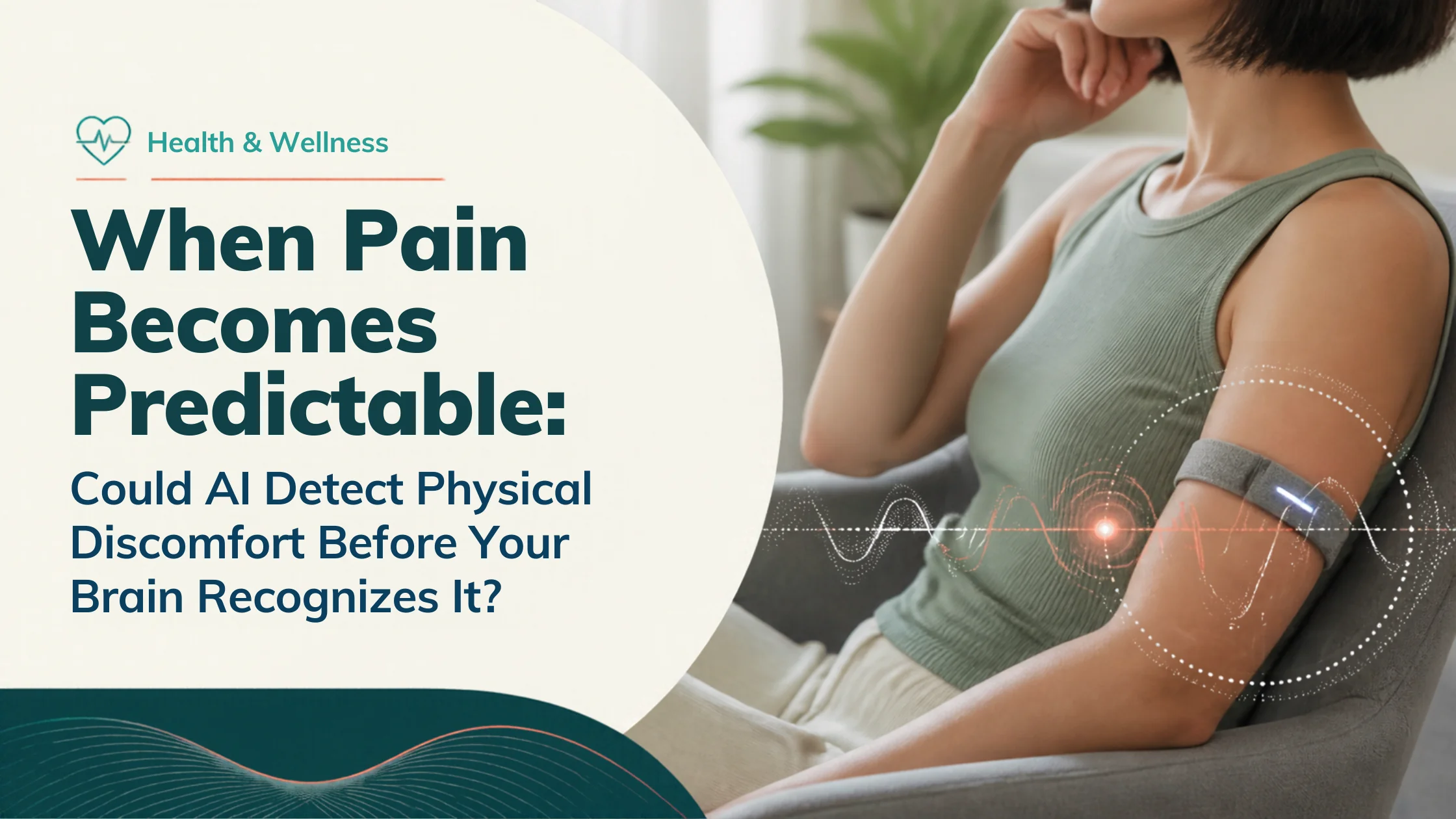
Future wearable devices might recognize changes that have preceded previous pain episodes and warn users that discomfort could be approaching.
This possibility introduces an interesting question: Could AI eventually recognize the conditions associated with pain before a person consciously experiences it?
Although current technology cannot reliably predict every pain experience, ongoing research is exploring how physiological monitoring might support earlier intervention.
However, these developments also raise concerns about accuracy, privacy, personal autonomy, and the psychological effects of continuously monitoring the body.
Can Artificial Intelligence Really Predict Physical Pain?
Artificial intelligence can analyze patterns in biological data that may be associated with pain.
Machine learning systems examine information from sensors, clinical records, and reported symptoms to identify relationships that might be difficult to recognize manually.
For example, researchers can investigate whether changes in sleep, physical activity, or physiological responses are associated with worsening pain in certain individuals.
If these relationships are consistent, an algorithm might estimate the likelihood of a future pain episode.
However, identifying a statistical pattern is different from predicting an individual’s exact experience.
Pain is influenced by numerous biological, psychological, and environmental factors. Two people with similar physiological measurements may report very different levels of discomfort.
Current research has not established a universal AI system capable of accurately predicting pain before conscious awareness.
The realistic opportunity is predicting certain pain-related patterns and risks, rather than reading future sensations directly from the body.
How Does the Brain Recognize Pain?
Pain involves complex communication between the nervous system and the brain.
Specialized sensory receptors called nociceptors detect potentially harmful conditions, including certain forms of extreme temperature, pressure, or chemical irritation.
These receptors generate signals that travel through neural pathways.
The nervous system processes this information alongside other factors, including attention, previous experiences, expectations, and emotional context.
Importantly, nociception and pain are not identical.
Nociception refers to the nervous system’s detection and processing of potentially harmful stimuli. Pain refers to the unpleasant sensory and emotional experience that may result.
Someone can experience pain without obvious ongoing tissue damage, and potentially harmful stimulation does not always produce conscious pain.
This distinction matters when discussing AI.
A device might identify physiological activity associated with a painful condition, but that does not prove it has detected a person’s subjective experience before the brain recognizes it.
More accurately, AI might detect early changes before discomfort reaches conscious awareness or predict circumstances associated with future pain.
What Biological Signals Could AI Monitor Before Pain Appears?
The body produces measurable signals that can change during stress, physical exertion, inflammation, and painful experiences.
Researchers are examining whether combinations of these measurements can improve pain assessment.
<text weight=”medium”>Potential information sources include:</text>
- Heart rate: Changes may accompany stress, physical activity, or certain painful experiences.
- Heart rate variability: Patterns may provide information about autonomic nervous system activity.
- Skin conductance: Changes can reflect physiological arousal.
- Muscle activity: Sensors may detect muscular tension or unusual movement patterns.
- Sleep behavior: Disrupted sleep may be associated with certain pain conditions.
- Movement patterns: Changes in posture, walking, or activity could reveal developing functional difficulties.
- Brain activity: Specialized research equipment may identify neural patterns associated with certain pain states.
None of these measurements provides a definitive pain reading.
Heart rate, for example, can increase because of exercise, anxiety, excitement, illness, or many other reasons.
The potential value comes from examining multiple signals in context rather than treating one measurement as proof of discomfort.
Could Wearable Devices Warn You Before a Pain Flare-Up?
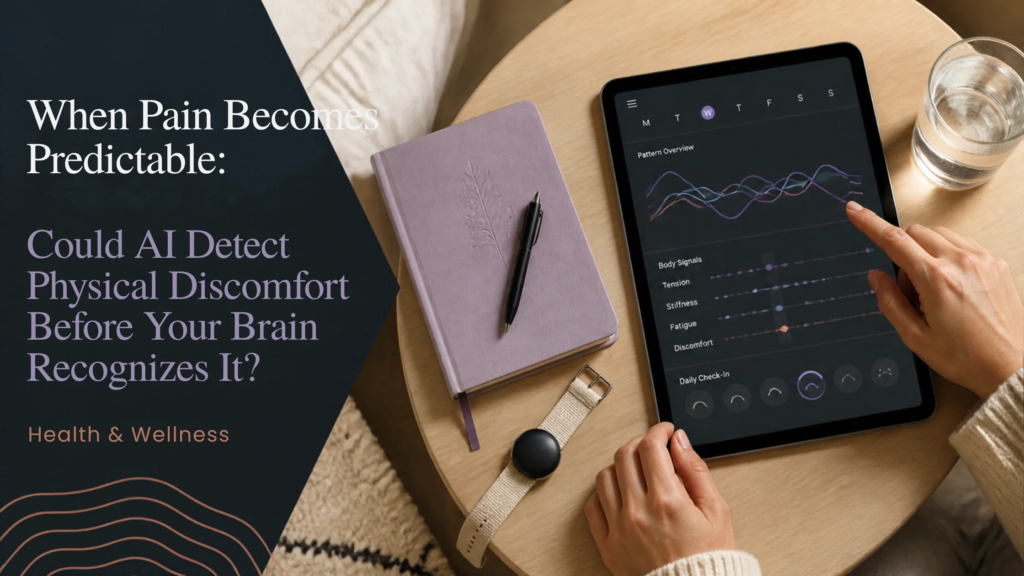
Smartwatches and wearable health monitors already collect information about movement, heart rate, sleep, and other physiological measurements.
Researchers are exploring whether such information could help recognize patterns associated with recurring pain.
Consider someone who experiences frequent headaches.
Over time, a monitoring system might identify that certain changes in sleep and daily activity often occur before reported episodes.
An AI model could use that personal history to estimate when another episode may be more likely.
Future applications might provide an alert encouraging the person to review known triggers or follow an existing clinician-approved management plan.
However, these predictions would remain uncertain.
A poor night’s sleep does not guarantee a headache, and a painful episode may occur without recognizable warning signs.
Wearable technology may eventually help identify individual patterns, but consumer devices should not be assumed capable of accurately forecasting pain.
Could AI Predict Chronic Pain Before Symptoms Become Severe?
Chronic pain is particularly challenging because symptoms can change over time.
Some individuals experience relatively stable discomfort, while others have periods of worsening symptoms known as flare-ups.
These fluctuations may be associated with sleep, activity, stress, underlying medical conditions, and other factors.
Researchers are investigating whether personalized machine learning models can identify patterns linked to these changes.
For example, a person managing chronic lower back pain might record daily symptoms alongside activity and sleep information.
An algorithm could examine whether particular combinations have preceded worsening symptoms.
This approach may eventually support more individualized pain management.
However, chronic pain has multiple causes and mechanisms. A prediction method that works for one person may not work for another.
Larger studies and real-world validation are necessary before such systems can be treated as dependable clinical tools.
Could AI Detect Pain in People Who Cannot Communicate?
One particularly important application involves patients who cannot easily describe what they are experiencing.
Infants, people with certain communication difficulties, and some patients in intensive care may be unable to provide conventional pain ratings.
Healthcare professionals already use observational assessment methods that consider behavior, movement, and physiological responses.
AI-assisted systems could potentially support these assessments.
For example, computer vision may analyze facial expressions associated with discomfort.
Other systems may examine movement, vocalizations, or physiological changes.
Combining multiple sources could provide additional information for clinicians.
However, facial expressions and biological signals do not consistently reveal the intensity or cause of pain.
People express discomfort differently, and some patients may show few outward signs.
AI should therefore support professional assessment rather than replace clinical judgment or invalidate a patient’s reported experience.
Can AI Tell the Difference Between Pain and Stress?
Pain and stress can produce overlapping physiological responses.
Both may affect heart rate, muscle tension, breathing, and autonomic nervous system activity.
This creates a major challenge for automated detection.
Imagine a wearable device identifying elevated heart rate and increased skin conductance.
Those changes might occur during pain, but they could also reflect an intense workout, emotional stress, or excitement.
If the algorithm interprets every physiological change as discomfort, it may generate frequent false warnings.
Researchers are therefore investigating approaches that combine physiological signals with context.
Activity data, symptom reports, environmental conditions, and individual baseline measurements may help improve interpretation.
Even then, perfect separation is unlikely.
The system must recognize uncertainty rather than claim it can determine exactly what a person feels.
Could AI Identify Pain That People Have Learned to Ignore?
Some individuals become accustomed to living with recurring discomfort.
They may continue working, exercising, or performing daily activities while paying relatively little attention to certain symptoms.
This raises questions about whether monitoring technology could identify changes that people overlook.
For example, a wearable system might recognize altered movement patterns associated with previous episodes of discomfort.
It could notify the user that their activity has changed.
However, an abnormal movement pattern does not necessarily prove that someone is experiencing unrecognized pain.
Changes might result from fatigue, exercise, injury, or ordinary adjustments in movement.
The purpose of monitoring should be to provide useful information, not convince people that hidden suffering must exist.
An algorithm cannot automatically know more about someone’s subjective experience than the person themselves.
Could Predictive Pain Technology Prevent Injuries?
Pain prediction and injury prediction are related but distinct concepts.
Some injuries are preceded by measurable changes in movement, workload, or physical performance.
Monitoring systems may help identify conditions associated with increased injury risk in specific activities.
For example, unusual movement patterns during exercise could suggest that a person is compensating for fatigue or physical limitations.
An appropriately validated system might recommend reviewing technique or training intensity.
However, predicting injury risk does not establish that pain is about to occur.
Not every injury causes immediate pain, and pain can occur without identifiable tissue damage.
AI may eventually contribute to injury-prevention research, but it should not encourage people to ignore discomfort or rely on algorithms to determine whether an activity is safe.
What Happens When an AI Pain Prediction Is Wrong?
False predictions could become a significant challenge as predictive health technology develops.
A device might warn someone that a pain episode is approaching even when no discomfort follows.
Repeated false alerts could cause unnecessary worry.
Conversely, a system might fail to predict a significant episode, leading users to develop misplaced confidence in the technology.
Both outcomes matter.
Healthcare-related predictions should communicate uncertainty and be evaluated against meaningful clinical outcomes.
A useful system should explain whether an alert represents an observed physiological change, an estimated increase in risk, or a clinically evaluated concern.
It should never imply that a predicted symptom is guaranteed.
Accuracy must also be tested across different populations, health conditions, and everyday environments.
Could Pain Prediction Make People More Anxious About Their Bodies?
Continuous monitoring may change how individuals experience ordinary physical sensations.
A person who receives frequent warnings about possible discomfort might begin paying greater attention to every minor ache.
Even harmless changes could feel concerning if presented as signs of an approaching pain episode.
For some people, anticipatory worry may become more disruptive than the symptoms the device attempts to predict.
This is especially relevant because pain perception is influenced by attention, expectations, and emotional context.
An alert could therefore affect how someone interprets their bodily sensations.
However, this does not mean predictive technology necessarily increases anxiety.
Some individuals may feel reassured by useful monitoring, particularly when managing an established medical condition.
The challenge is designing systems that provide helpful information without encouraging excessive health vigilance.
Could AI Eventually Recommend Treatment Before Pain Begins?
Future systems might connect predictive monitoring with personalized pain management.
For example, a clinician could establish an individualized plan for someone with recurring symptoms.
A monitoring platform might recognize patterns associated with previous episodes and remind the person to review that plan.
This could involve activity adjustments, rest, or other clinician-recommended measures.
However, automatically delivering medication or changing treatment based solely on an algorithm raises additional safety concerns.
Pain medications have risks, and treatment decisions depend on the cause of symptoms, medical history, and other factors.
A false prediction could lead to unnecessary treatment.
More advanced automated treatment systems would therefore require strong clinical evidence, appropriate regulatory oversight, and safeguards.
Predictive information should support medical decisions rather than automatically justify intervention.
Who Would Own the Data Used to Predict Pain?
Pain prediction systems could collect highly personal health information.
Physiological measurements, symptom histories, sleep records, movement patterns, and medical details may reveal sensitive information about everyday life.
Some future systems might also use facial analysis or other forms of continuous observation.
This raises questions about consent, privacy, and data access.
Would information remain on the user’s device, or would it be transmitted to external servers?
Could insurers, employers, or commercial platforms gain access to predictions about someone’s physical condition?
Might an incorrect pain estimate influence how others evaluate a person’s health?
These possibilities highlight the need for clear data practices and meaningful user control.
Health information should be protected against unauthorized access and unrelated secondary uses.
Individuals should also understand what an algorithm can reasonably infer from their measurements.
Could Predictive Pain Algorithms Treat Some People Unfairly?
Pain is not expressed or experienced identically across populations.
Age, medical conditions, disability, communication differences, and personal experiences can affect how pain appears in observable data.
An algorithm trained primarily on one population may perform poorly when applied to another.
Facial-expression systems, for example, may struggle with people whose facial mobility is affected by certain medical conditions.
Wearable measurements may also be influenced by movement, sensor placement, and individual physiological differences.
If an AI system underestimates someone’s pain, the consequences could be serious.
It might reinforce existing problems in which certain patients struggle to have their symptoms recognized.
Developers must therefore evaluate performance across diverse populations and ensure that algorithmic scores never become grounds for dismissing a patient’s description of discomfort.
What Would Reliable AI Pain Prediction Require?
Developing useful pain prediction systems requires more than collecting large quantities of physiological data.
Researchers need to establish whether the measurements meaningfully correspond with future pain experiences.
Studies must also determine how far in advance predictions can be made and whether they improve actual health outcomes.
Important requirements include:
- Diverse clinical research populations
- Reliable measurements across different environments
- Personalized baseline information
- Independent testing outside development datasets
- Clear reporting of false predictions
- Strong privacy and security protections
- Appropriate medical oversight
- Evidence that predictions improve patient care
A system that performs well during controlled experiments may not behave similarly during ordinary daily life.
The ultimate measure of success should be whether the technology helps people manage discomfort safely and effectively.
Could the Future of Pain Management Become More Predictive?
Pain management may gradually incorporate more continuous monitoring and personalized analysis.
Instead of relying entirely on occasional appointments and remembered symptoms, patients could potentially share longer-term patterns with healthcare professionals.
AI might help identify relationships between activities, physiological measurements, and reported discomfort.
These insights could support more informed conversations about treatment.
However, the future is unlikely to involve a single device capable of accurately forecasting every painful sensation.
Pain is too complex to reduce to one universal measurement.
The more realistic possibility is a collection of specialized tools developed for particular conditions and clinical situations.
Some may help recognize pain-related behavior, while others may estimate the likelihood of symptom changes.
Their value will depend on accuracy, clinical usefulness, and respect for individual experiences.
People Also Ask About AI Pain Detection and Prediction
Can AI detect pain before a person feels it?
AI may eventually identify physiological changes or personal patterns associated with future discomfort. However, no established system can reliably detect all pain before conscious awareness. Pain is a subjective experience, and physiological signals alone cannot determine exactly what a person will feel.
Can a smartwatch predict when pain will start?
Current consumer smartwatches are not established tools for reliably predicting the onset of pain. They can measure factors such as heart rate, activity, and sleep that may be relevant to certain conditions. Researchers are studying whether these measurements could support personalized symptom predictions.
Can artificial intelligence predict chronic pain flare-ups?
Researchers are investigating whether machine learning can estimate changes in chronic pain using information about symptoms, sleep, movement, and other factors. Early findings suggest potential for individualized prediction, but accuracy varies, and these systems require further validation before routine clinical use.
Can AI measure pain more accurately than humans?
AI can analyze certain observable signs consistently, but it cannot directly measure the full subjective experience of pain. A person’s own report remains central when they can communicate. Automated tools may provide useful supplementary information, particularly in situations where conventional assessment is difficult.
Can brain scans reveal pain before someone notices it?
Brain imaging can identify activity associated with certain pain-related processes, but there is no universally reliable brain scan that predicts every future pain experience. Neural activity does not translate into a simple, definitive pain measurement, and research findings require careful interpretation.
Could AI prevent headaches before they begin?
Researchers may eventually identify patterns associated with certain recurring headaches and migraine episodes. However, the usefulness of prediction depends on the individual and condition. A warning does not guarantee that a headache will occur, and preventive treatment should follow appropriate medical guidance.
Can AI confuse anxiety or stress with physical pain?
Yes. Stress and pain can produce overlapping physiological signals, including changes in heart rate, breathing, and muscle activity. Algorithms using these measurements may struggle to distinguish their causes. Combining different measurements and contextual information may help, but uncertainty remains.
Could AI pain prediction replace doctors in the future?
AI may help healthcare professionals monitor symptoms and identify patterns, but it cannot replace clinical evaluation. Pain assessment requires medical history, examination, individual context, and judgment. Predictive systems are best understood as potential decision-support tools rather than independent medical authorities.
When Technology Begins Anticipating What the Body Feels
Pain has traditionally been understood through personal experience. People recognize discomfort, describe their symptoms, and seek help when necessary.
Artificial intelligence introduces the possibility of identifying patterns that precede certain experiences.
Wearable sensors, physiological monitoring, and personalized algorithms could eventually provide earlier warnings for some recurring symptoms.
These developments may improve how clinicians study pain and help patients understand changes in their condition.
However, recognizing a biological signal is not the same as understanding a person’s pain.
Algorithms can misinterpret ordinary physiological changes, produce false predictions, and overlook important individual differences.
Responsible development must therefore prioritize scientific accuracy, privacy, clinical judgment, and the right of individuals to describe their own experiences.
The future of predictive pain technology may not involve machines sensing discomfort before the brain does.
Instead, it may involve systems that recognize meaningful warning patterns before people would ordinarily notice or connect them.
Because the greatest achievement of AI in pain medicine may not be predicting every uncomfortable sensation, but helping people understand their bodies earlier without allowing technology to define what they feel.
Leave a Reply