
Modern homes are consuming electricity in ways that would have been difficult to imagine a few decades ago. Electric vehicles, smart appliances, advanced heating and cooling systems, home offices, and connected devices are transforming ordinary households into increasingly complex energy environments.
Yet behind the convenience of these technologies lies an important question: Can a home’s electrical infrastructure keep up with constantly changing power demands?
Electrical systems are often hidden behind walls, beneath floors, and inside panels that homeowners rarely inspect. Unlike a leaking pipe or a damaged roof, developing electrical problems may produce few obvious warning signs.
Wiring connections can deteriorate, electrical loads can change, and older equipment may gradually become less suitable for the demands placed upon it.
Even recently constructed homes could eventually face challenges if energy consumption grows beyond what their electrical systems were designed to accommodate.
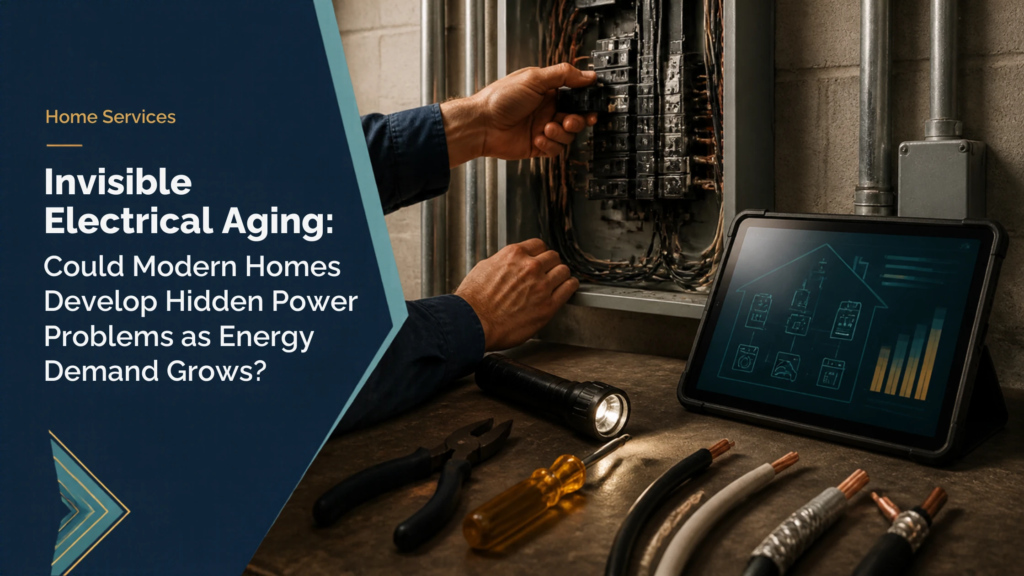
This raises a possibility worth exploring: Could invisible electrical aging become one of the biggest maintenance challenges facing future smart homes?
Understanding how electrical systems change over time may help homeowners recognize why increasing energy demand requires more than simply adding new appliances.
What Is Invisible Electrical Aging?
Invisible electrical aging describes the gradual deterioration of electrical components that may occur without obvious outward signs.
Residential electrical systems contain wiring, connections, circuit breakers, outlets, switches, and other components designed to distribute electricity safely.
These components are exposed to operating conditions that can affect their performance over time.
Heat, moisture, corrosion, environmental exposure, and repeated thermal expansion can contribute to deterioration.
Electrical connections may also become problematic because of improper installation, physical damage, or inadequate maintenance.
However, aging does not mean every electrical component will inevitably become unsafe after a specific number of years.
Properly installed wiring operating within its intended conditions can remain serviceable for decades.
Problems develop when components deteriorate, become damaged, or are used in ways they were not designed to support.
The challenge is that many developing issues remain concealed until unusual symptoms appear or a qualified electrician discovers them during an inspection.
Why Are Modern Homes Using More Electricity?
Household electricity consumption is changing as more activities depend on electrical equipment.
Traditional residential electrical systems already support lighting, refrigeration, cooking, heating, and numerous everyday appliances.
Today, some households are adding equipment with substantial power requirements.
Examples include:
- Electric vehicle chargers: Home charging equipment can create significant sustained electrical demand.
- Electric heat pumps: Electrified heating and cooling may change seasonal electricity consumption.
- Induction cooking equipment: Electric cooking can contribute to substantial kitchen loads.
- Home offices: Computers, monitors, networking equipment, and related electronics increase everyday electricity use.
- Electric water heaters: Certain systems require significant electrical capacity.
- Battery storage systems: Home energy equipment may introduce additional circuits and electrical operating conditions.
Not all these technologies necessarily increase total household energy consumption. Some, particularly efficient heat pumps, can reduce overall energy use compared with alternative systems.
However, they may increase demand on specific electrical circuits or alter when electricity is consumed.
The important consideration is whether the home’s electrical infrastructure can safely support the combination of connected equipment.
Could New Appliances Overload Wiring That Previously Worked Fine?
An electrical system may operate without noticeable problems for years before homeowners introduce additional equipment.
Consider a house originally designed around conventional lighting, basic appliances, and moderate electrical demand.
Over time, the owners might install a larger air-conditioning system, purchase an electric vehicle, and replace gas-powered equipment with electric alternatives.
These changes could significantly affect the property’s electrical requirements.
However, the presence of additional appliances does not automatically mean existing wiring is overloaded.
Properly designed circuits and electrical protection devices are intended to operate within established limits.
Problems arise when loads exceed a circuit’s appropriate capacity, equipment is connected incorrectly, or existing deficiencies become more significant under increased demand.
Greater electricity consumption does not automatically damage a healthy electrical system, but it can expose capacity limitations and previously unnoticed defects.
That distinction is essential when evaluating whether a modern household requires electrical upgrades.
How Can Electrical Wiring Deteriorate Without Visible Warning Signs?
Most residential wiring is concealed within walls, ceilings, and protected building cavities.
This arrangement helps protect electrical components from everyday damage while keeping living spaces functional.
However, concealed wiring also makes certain problems difficult to observe.
Insulation may deteriorate because of excessive heat, physical damage, moisture exposure, or unsuitable environmental conditions.
Connections can also develop problems that are not visible from the outside.
For example, a poorly secured connection may create excessive electrical resistance and localized heating.
Over time, repeated heating can worsen certain connection problems.
These conditions do not necessarily produce immediately noticeable changes in household electricity.
A light may continue operating while an associated connection is deteriorating.
Because electrical defects can remain hidden, professional evaluation is important when warning signs or relevant risk factors are present.
Homeowners should never remove electrical covers or disturb concealed wiring to investigate suspected defects themselves.
Could Electric Vehicle Charging Accelerate Electrical Problems?
Electric vehicle charging introduces a type of electrical demand that differs from many ordinary household activities.
Depending on the charger and vehicle, home charging can continue for several hours.
This extended operating period makes proper circuit design particularly important.
A correctly installed charging system should account for electrical service capacity, circuit protection, conductor sizing, equipment specifications, and applicable installation requirements.
Problems may arise when charging equipment is connected through unsuitable wiring or when the property lacks sufficient available electrical capacity.
Existing connection defects may also become more concerning when subjected to sustained loading.
However, electric vehicle charging does not automatically accelerate electrical aging in a properly designed and installed system.
The actual risk depends on the condition and suitability of the installation.
Before adding charging equipment, homeowners should arrange an appropriate electrical assessment rather than assuming an available outlet or panel space guarantees sufficient capacity.
Are Newly Built Homes Protected From Electrical Aging?
Modern construction often benefits from updated electrical standards, improved protective devices, and greater awareness of contemporary equipment needs.
However, a recently constructed home is not automatically immune to electrical problems.
Installation defects, damaged components, defective equipment, and unsuitable modifications can create problems regardless of building age.
Future electricity demand can also exceed the assumptions made during the original electrical design.
For example, a house constructed for conventional household appliances may later receive multiple electric vehicle chargers, additional HVAC equipment, or other substantial electrical loads.
These additions could require capacity evaluation or electrical modifications.
Electrical system suitability depends on its design, condition, and actual operating requirements rather than construction date alone.
A newer home may have fewer age-related concerns while still requiring upgrades to support major new equipment.
Why Can Electrical Connections Become More Vulnerable Over Time?
Electrical connections are essential because they provide the contact required for electricity to flow between components.
A properly made connection is designed to operate safely within its rated conditions.
However, loose, damaged, corroded, or improperly installed connections may develop excessive resistance.
That resistance can generate localized heat.
Repeated temperature changes and environmental exposure can sometimes contribute to further deterioration.
The consequences depend on the location, severity, and type of connection problem.
Some conditions may produce intermittent equipment operation, while others can present serious overheating or fire risks.
Not every deteriorating connection will cause a circuit breaker to trip.
This is one reason professional electrical inspections can be valuable when there are unexplained symptoms, known installation problems, or significant equipment changes.
Could Smart Homes Hide Electrical Problems Behind Automation?
Connected technology can make household electricity consumption easier to manage.
Smart thermostats, automated lighting, energy-monitoring devices, and scheduled appliance controls may help reduce unnecessary energy use.
However, automation can also change how electrical activity is distributed throughout the day.
Several appliances might begin operating according to programmed schedules, creating periods of higher combined demand.
Well-designed electrical systems should account for the loads they serve.
Yet automated operation does not eliminate underlying wiring defects or electrical capacity limitations.
A homeowner may also assume that a sophisticated smart home automatically monitors electrical safety.
In reality, many smart devices focus on convenience, energy management, or remote control rather than comprehensive fault detection.
A connected home can be technologically advanced while still containing electrical infrastructure that requires professional evaluation.
Can Circuit Breakers Detect Every Developing Electrical Problem?
Circuit breakers provide essential protection against specified electrical conditions, including over currents and short circuits.
Different protective devices may also address particular hazards, such as certain arc faults or ground faults.
However, no single protective device identifies every possible electrical defect.
For example, a poor electrical connection may generate localized heat without immediately creating an overcurrent sufficient to operate a conventional circuit breaker.
Similarly, certain equipment problems may develop before protective devices respond.
Circuit breakers are therefore important safety components, but they do not replace proper installation, maintenance, and inspection.
Repeated breaker trips should never be treated as a normal inconvenience.
They may indicate overloading, faulty equipment, or another electrical condition requiring evaluation.
Homeowners should avoid repeatedly resetting a breaker without identifying why it is operating.
What Warning Signs Could Reveal Hidden Electrical Deterioration?
Although some electrical problems remain concealed, others produce noticeable symptoms.
Homeowners should pay attention to changes in electrical performance, particularly when they occur repeatedly or affect several areas.
Potential warning signs include:
- Frequently tripping breakers: Repeated interruptions may indicate overloading or electrical faults.
- Unusual buzzing or crackling: Electrical equipment producing unexpected sounds may require inspection.
- Discolored outlets or switches: Visible damage can indicate overheating or other problems.
- Persistent burning odors: Unexplained burning smells near electrical equipment require immediate attention.
- Intermittent power: Repeated interruptions may suggest connection or equipment issues.
- Unusual light flickering: Persistent or widespread flickering can warrant professional investigation.
- Warm electrical components: Unexpected heating of outlets, plugs, or switches may indicate a problem.
These symptoms do not establish a specific diagnosis.
For example, a brief light fluctuation when large equipment starts can have a different explanation from persistent flickering throughout a property.
However, recurring abnormalities should not be ignored.
If smoke, sparking, or signs of an active electrical fire appear, occupants should move to safety and contact emergency services.
Could AI Detect Electrical Aging Before Homeowners Notice It?
Artificial intelligence may eventually play a larger role in residential electrical monitoring.
Advanced monitoring systems can analyze selected measurements, including electrical current, voltage, and energy consumption.
By examining operating patterns, software may identify unusual changes that justify further investigation.
For example, repeated voltage irregularities or unexpected changes in equipment demand could trigger a monitoring alert.
Some specialized technologies can also help identify particular electrical abnormalities.
However, electrical measurements do not always reveal the exact location or cause of a problem.
AI cannot reliably determine the condition of every concealed wire simply by observing total household electricity consumption.
A system may recognize an unusual pattern without knowing whether it results from appliance behavior, supply conditions, or a wiring defect.
Future monitoring could improve early warning capabilities, but professional diagnosis would remain essential.
Could Growing Energy Demand Require More Home Electrical Upgrades?
Major changes in household equipment can make electrical capacity assessments increasingly important.
Homeowners considering electric vehicle charging, electric heating, or substantial renovations may need to evaluate their existing electrical systems.
An electrician can assess factors such as service capacity, panel condition, circuit availability, and the loads associated with planned equipment.
However, higher energy demand does not automatically require replacing the entire electrical panel.
Some properties may accommodate new equipment through appropriate circuit additions or other permitted modifications.
Others may benefit from load-management technologies that coordinate when selected appliances operate.
In certain circumstances, service or panel upgrades may be necessary.
The appropriate solution depends on the actual electrical installation and the equipment being added.
Age alone is not a sufficient reason to recommend replacement, just as an apparently modern panel does not guarantee adequate capacity.
Could Home Energy Storage Make Electrical Systems More Complicated?
Battery storage and residential solar installations can introduce additional electrical components and operating arrangements.
Instead of receiving electricity solely from the utility grid, a home may also generate, store, or distribute electricity through connected energy equipment.
These systems can provide useful capabilities, including backup power and improved management of energy consumption.
However, their installation requires suitable equipment, protective devices, and electrical design.
Home batteries do not inherently damage residential wiring when installed properly.
The concern is whether the broader electrical system has been evaluated for the additional equipment and operating conditions.
As homes incorporate more energy technologies, electrical planning may become increasingly important.
How Often Should Homeowners Have Their Electrical Systems Inspected?
There is no single inspection interval appropriate for every residence.
Electrical inspection needs can vary based on property age, installation condition, environmental exposure, past modifications, and local requirements.
Homeowners may benefit from arranging professional evaluation when purchasing an older property, planning substantial electrical additions, or experiencing persistent electrical symptoms.
Properties with known wiring problems or unusual operating conditions may require closer attention.
A qualified electrician can recommend an inspection or maintenance approach based on the actual system.
An electrical assessment may include reviewing panel condition, accessible connections, protective devices, and relevant circuit performance.
Not every concealed component can be evaluated without additional investigation.
Professional inspections can help identify certain problems, but they cannot guarantee that every future electrical failure will be prevented.
What Could Electrical Maintenance Look Like in Future Homes?
Future residential electrical systems may combine improved monitoring with more detailed maintenance records.
Instead of relying entirely on visible symptoms, homeowners could receive notifications when selected electrical measurements change unexpectedly.
A connected monitoring platform might track equipment demand, identify unusual consumption patterns, and recommend investigation when appropriate.
Digital maintenance records could also help electricians understand previous upgrades, repairs, and equipment installations.
However, effective monitoring would require accurate sensors, reliable software, and clear limits on what the technology can determine.
The goal should not be to create constant warnings about ordinary changes in electricity use.
It should be to provide meaningful information that helps homeowners recognize when professional attention may be necessary.
People Also Ask About Hidden Electrical Aging in Modern Homes
Can electrical wiring deteriorate even if everything still works?
Yes. Certain electrical components and connections can deteriorate without immediately interrupting power. Moisture, heat exposure, physical damage, and installation defects may contribute to hidden problems. Continued operation does not guarantee that every part of an electrical system is in satisfactory condition.
Does using more electricity make home wiring age faster?
Not necessarily. Properly installed wiring designed for the electrical loads it carries can operate reliably for many years. However, excessive loading, abnormal heating, and existing defects may contribute to deterioration. A qualified electrician can assess whether additional equipment is appropriate for the existing system.
Can an older electrical panel handle modern appliances?
Some older panels can accommodate modern household equipment, while others may have capacity, condition, or safety concerns. Suitability depends on the electrical service, connected loads, panel design, and installation condition. Panel age alone does not establish whether an upgrade is necessary.
Can electric vehicle chargers damage household wiring?
A correctly designed and installed charging circuit should support its intended load. Problems may occur when charging equipment uses unsuitable wiring, inadequate electrical capacity, or defective connections. Professional assessment and installation are important because charging may involve substantial sustained electrical demand.
Can smart electrical monitors detect dangerous wiring problems?
Some monitoring systems can identify certain abnormal electrical patterns and provide useful alerts. However, they cannot detect every hazardous condition or determine the precise cause of every irregularity. Smart monitoring should complement, not replace, appropriate electrical protection and professional inspections.
Why do lights flicker when several appliances are running?
Light flickering can result from changes in electrical demand, voltage fluctuations, equipment starting, or connection problems. Occasional minor fluctuations may have relatively ordinary explanations, but persistent, severe, or widespread flickering requires professional evaluation.
Can electrical systems become unsafe without circuit breakers tripping?
Yes. Circuit breakers respond to particular electrical conditions and may not detect every form of connection deterioration or localized overheating. A circuit that continues operating can still contain defects. Warning signs such as burning odors, damaged outlets, or unusual heating require prompt attention.
Should homeowners upgrade electrical wiring when installing smart home devices?
Not always. Many small connected devices have relatively modest power requirements. However, substantial new equipment such as EV chargers, electric heating systems, or large appliances may require an electrical capacity assessment. Necessary upgrades depend on the existing installation and planned loads.
Could Invisible Electrical Aging Become a Defining Problem for Future Homes?
Modern households are becoming more dependent on electricity, but much of the infrastructure supporting that dependence remains hidden from view.
Smart appliances, electric vehicles, energy storage systems, and advanced heating technologies are changing how homes consume and manage power.
These innovations offer meaningful benefits, yet they also make appropriate electrical planning increasingly important.
Electrical aging is not simply a consequence of using more technology. Properly designed systems can support substantial electrical demand without experiencing abnormal deterioration.
The real concern emerges when damaged components, poor connections, outdated installations, or insufficient capacity go unnoticed as household requirements change.
Future monitoring technologies may help identify certain abnormalities earlier, but they cannot replace qualified electrical professionals or sound installation practices.
Homeowners may increasingly need to evaluate electrical infrastructure whenever they introduce major energy-consuming equipment.
Because a modern home is only as dependable as the systems supporting it.
And as residential electricity demand evolves, one of the most important home maintenance challenges may involve protecting the electrical infrastructure nobody sees until something goes wrong.
Leave a Reply