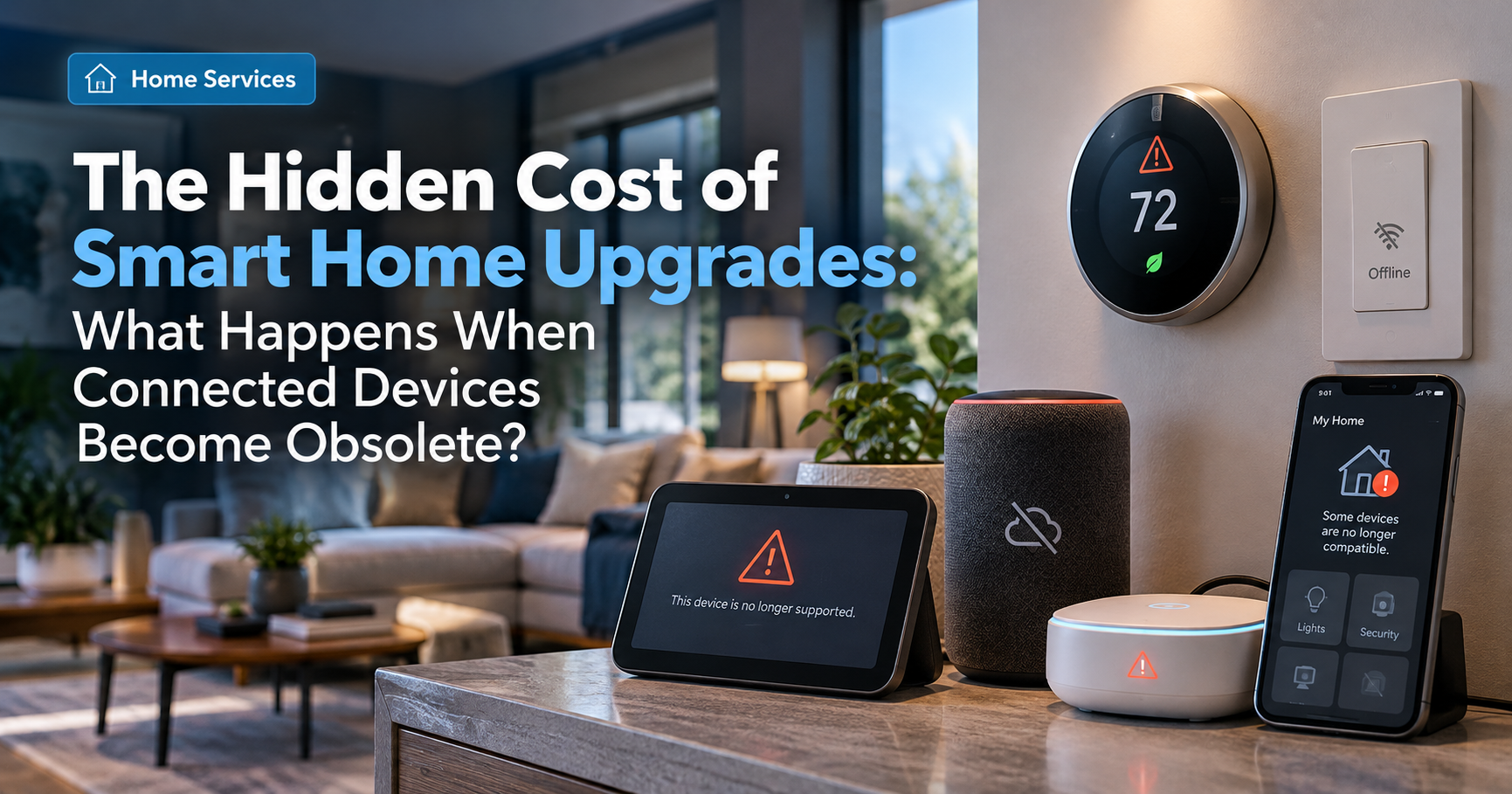
Smart home devices can become obsolete long before they stop working. A thermostat may still control the temperature, a security camera may still capture video, and a smart lock may still function mechanically. However, these devices can lose essential features when manufacturers discontinue software support, cloud services, or compatibility with newer systems.
This creates an overlooked cost of connected homeownership. Homeowners may need to replace functional equipment simply because the technology supporting it has changed. Understanding how smart home obsolescence works can help households evaluate long-term expenses, security concerns, and the actual value of connected home investments.
Why do smart home devices become obsolete even when their hardware still functions?
Smart home devices become obsolete when their software, communication protocols, or supporting services can no longer meet current requirements. Physical components may remain operational, but the connected features that originally justified the purchase may stop functioning.
Unlike traditional household equipment, connected devices depend on an evolving digital infrastructure.
A conventional thermostat can operate for years without internet access. A smart thermostat, however, may depend on manufacturer applications, cloud servers, and compatible operating systems to provide remote access and automation.
Several factors contribute to premature technological obsolescence.
Manufacturer support cycles
Manufacturers typically provide software updates for a limited period. Support policies vary considerably between brands and product categories.
When a product reaches the end of its support period, the manufacturer may stop releasing new features, compatibility improvements, and security patches.
The device might continue working, but its ability to integrate with newer technology can gradually decline.
Changes in communication standards
Connected homes use communication technologies such as Wi-Fi, Bluetooth, Zigbee, Thread, and Z-Wave.
As standards evolve, older devices may struggle to communicate with newer hubs, routers, or automation platforms.
Newer smart home interoperability standards, including Matter, aim to improve compatibility between participating manufacturers. However, Matter support does not automatically make older equipment compatible.
Some devices require updated hardware, firmware, or compatible controllers.
Dependence on cloud services
Many smart home products rely on remote servers for functionality.
Cloud services may manage:
- Remote device access through mobile applications.
- Voice assistant integration.
- Automated schedules and routines.
- Video recording and cloud storage.
- Notifications and activity histories.
- Communication between connected devices.
If a manufacturer closes its cloud platform, affected products may lose some or all connected capabilities.
Devices designed for local control may retain more functions, depending on their architecture.
What happens when manufacturers discontinue software updates for connected home devices?
When manufacturers discontinue software updates, connected devices may remain usable but become increasingly difficult to maintain.
The consequences depend on whether the manufacturer ends feature development, security maintenance, or the entire supporting service.
These distinctions matter because discontinued updates do not always mean immediate device failure.
Applications may become incompatible
Smart home devices frequently depend on smartphone applications for configuration and daily control.
As mobile operating systems change, older applications may stop working correctly.
Homeowners might experience connection failures, missing features, or difficulty adding devices to their networks.
A product that works today may become inconvenient after a future phone or operating system upgrade.
Automation features may stop working
Connected devices often operate through linked automation routines.
For example, a household might use motion sensors to activate lighting, adjust temperatures, or trigger security notifications.
If an unsupported device loses access to its automation platform, these routines may fail.
Homeowners could need to rebuild their automation systems using replacement hardware or another compatible platform.
Technical assistance becomes limited
Once a manufacturer ends product support, replacement components, troubleshooting resources, and customer assistance may become less available.
This can make relatively minor problems difficult to resolve.
A factory reset, network change, or replacement router might require configuration steps that are no longer supported.
Some functions may remain available
Not every discontinued device becomes unusable.
A smart light switch may retain manual operation. A thermostat may continue basic temperature control. Some cameras may support local recording without cloud access.
However, continued functionality depends on product design.
Before replacing equipment, homeowners should confirm which features actually require active manufacturer support.
Can outdated smart home technology create security risks and additional replacement costs?
Yes. Outdated smart home technology can introduce cybersecurity vulnerabilities and unexpected replacement expenses, especially when devices remain connected to home networks after security support ends.
Connected equipment exchanges information with mobile applications, routers, cloud platforms, and other household systems.
Without security updates, newly discovered vulnerabilities may remain unresolved.
Security risks from unsupported devices
Potential concerns include:
- Unpatched vulnerabilities: Security weaknesses may remain exploitable without manufacturer fixes.
- Unauthorized access: Poorly secured devices could expose cameras, controls, or stored information.
- Network exposure: Compromised connected products may provide opportunities to attack other networked equipment.
- Data privacy: Unsupported applications and services may lack current protections for personal information.
- Compatibility problems: Older authentication methods may not meet newer security requirements.
An unsupported device is not automatically compromised. However, the absence of security maintenance can increase risk over time.
Devices that no longer receive security patches should be assessed carefully, particularly cameras, smart locks, security systems, and equipment with remote access.
Replacement expenses extend beyond hardware
The purchase price of a new device may represent only part of the total cost.
Homeowners might also pay for professional installation, electrical modifications, network configuration, and system integration.
Replacing a smart thermostat could require checking HVAC wiring and equipment compatibility.
Updating a connected security system may involve replacing sensors, hubs, cameras, and subscription services.
Even affordable individual devices can become expensive when several products must be replaced together.
Subscription costs can accumulate
Some smart home products require ongoing payments for cloud storage, advanced monitoring, remote access, or automation features.
These recurring charges increase the total cost of ownership.
If a company changes its subscription structure or discontinues free features, homeowners may face additional expenses without receiving new hardware.
Evaluating lifetime operating costs is therefore more useful than comparing purchase prices alone.
How does technology obsolescence affect the long-term value of smart home investments?
Technology obsolescence can reduce the long-term value of smart home investments by shortening their useful life, increasing maintenance expenses, and limiting compatibility with future systems.
The financial value of connected equipment depends on more than convenience at installation.
A device must continue providing useful functions throughout a reasonable ownership period.
Smart features do not guarantee lasting value
Connected thermostats, lighting controls, and security systems can offer practical benefits.
However, those benefits may diminish when software support ends or replacement becomes necessary.
Energy savings, convenience, and automation improvements should be weighed against equipment costs, subscriptions, and future upgrades.
Not every smart home feature produces measurable financial savings.
Interoperability influences equipment lifespan
Products that support widely adopted standards and local control may offer greater flexibility.
Homeowners should consider whether devices can operate independently of a specific cloud platform.
Useful purchasing questions include:
- How long will the manufacturer provide security updates?
- Does the equipment function without internet access?
- Can it integrate with other manufacturers’ systems?
- Are firmware updates and replacement components available?
- What happens if the supporting application is discontinued?
- Will the device require ongoing subscription payments?
Clear answers can help homeowners avoid products with uncertain support arrangements.
Repairability and compatibility matter
Smart home improvements should be evaluated alongside conventional household infrastructure.
HVAC systems, electrical installations, and plumbing equipment often have service lives that exceed those of their connected control devices.
Choosing replaceable controllers and compatible components can help preserve the underlying equipment.
For example, replacing an outdated thermostat should not automatically require replacing an otherwise functional HVAC system.
However, compatibility must be confirmed before installation.
Home resale value remains uncertain
Smart home features may appeal to prospective buyers, but they do not guarantee a proportional increase in property value.
Older proprietary systems could actually create concerns if replacement parts, documentation, or software support are unavailable.
Reliable, transferable, and easy-to-maintain equipment is generally more useful than complicated automation that depends on discontinued technology.
Build a Smarter Home That Lasts
Smart home upgrades should improve daily living without creating unnecessary dependence on technology that may become unsupported.
Before investing in connected thermostats, lighting, security systems, or automated controls, homeowners should consider software support, compatibility, security maintenance, and potential replacement costs.
A thoughtful approach begins with understanding what is already installed and what will remain useful over time.
Consulting a qualified home services professional can help identify compatible upgrades, protect existing household systems, and prioritize improvements that offer lasting practical value.
The goal is not simply to install more connected devices. It is to create a home that remains functional, secure, and manageable as technology changes.
Leave a Reply