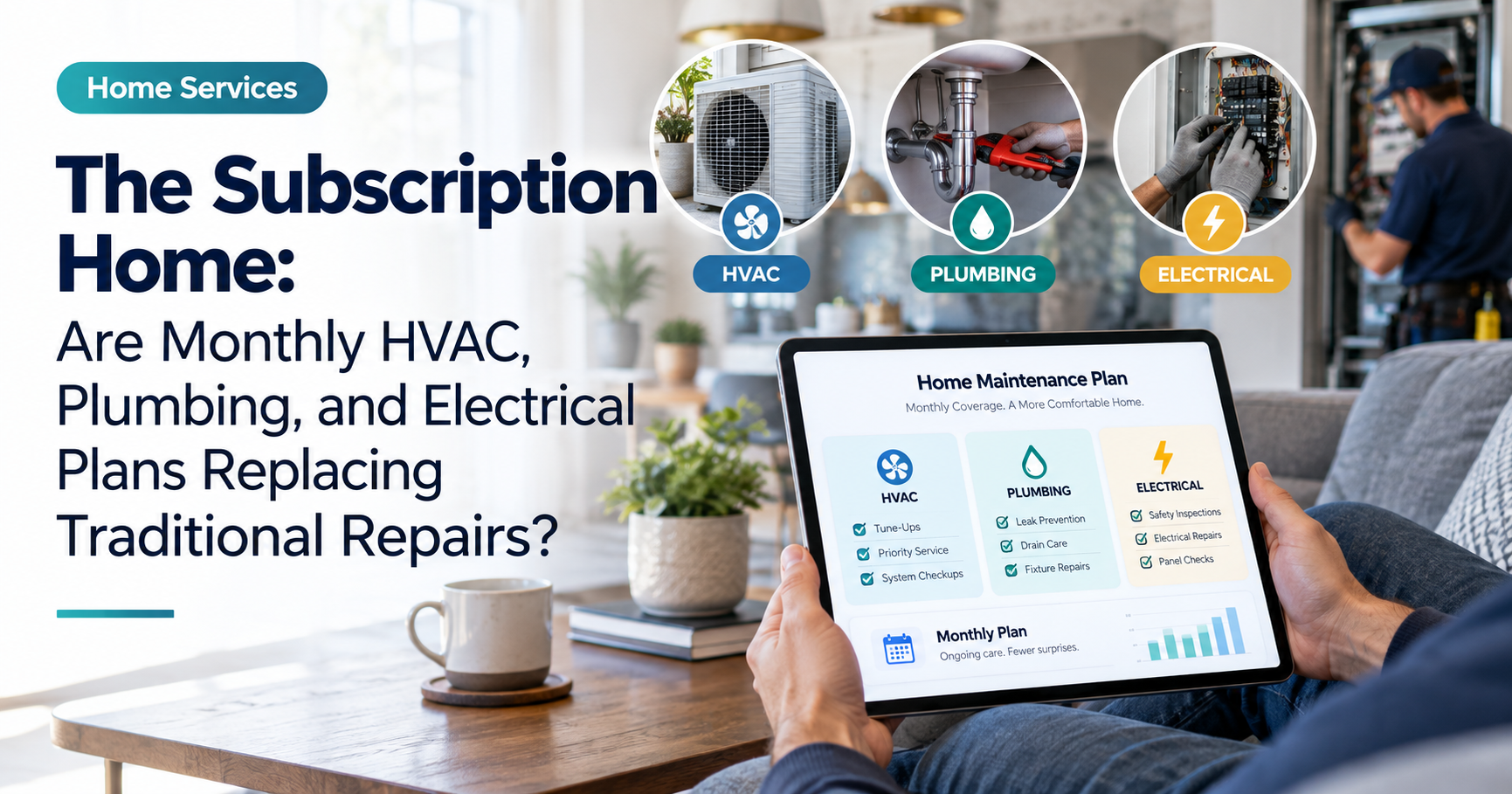
Monthly home maintenance subscriptions are changing how homeowners manage HVAC, plumbing, and electrical services. Instead of paying only when equipment fails, households can enroll in service plans that provide scheduled inspections, routine maintenance, and selected repair benefits for recurring fees.
These subscriptions offer a more predictable approach to property maintenance, particularly as equipment ages and repair expenses become difficult to anticipate. However, monthly plans do not necessarily replace traditional repairs or cover every emergency. Their financial value depends on service frequency, contract conditions, equipment requirements, and household budgets. Understanding these factors helps homeowners determine whether subscription-based maintenance provides meaningful benefits.
Why are homeowners choosing monthly home maintenance subscriptions instead of individual repairs?
Homeowners are choosing monthly maintenance subscriptions because they offer predictable payments, scheduled servicing, and easier access to professional assistance. Rather than arranging maintenance independently, subscribers receive services according to an established agreement.
Traditional home maintenance often follows a reactive approach. A homeowner contacts a contractor after discovering a leaking pipe, malfunctioning air conditioner, or electrical problem.
Unexpected repairs can create financial pressure, especially when multiple household systems require attention within a short period.
Subscription-based services encourage a more structured approach by scheduling maintenance before obvious problems develop.
Several factors contribute to their appeal:
- Predictable expenses: Fixed monthly fees make routine maintenance costs easier to include in household budgets.
- Convenient scheduling: Providers may arrange inspections and service reminders automatically.
- Preventive maintenance: Regular servicing can identify deterioration, leaks, and performance issues before they worsen.
- Established service relationships: Homeowners can work with familiar technicians who understand their equipment.
- Potential service discounts: Some memberships offer reduced diagnostic fees or discounts on qualifying repairs.
However, convenience does not automatically translate into financial savings.
A household with relatively new equipment may require fewer repairs than one with aging systems. Paying for an extensive maintenance membership may provide limited additional value when equipment remains under an existing manufacturer warranty.
Homeowners should also consider whether a plan addresses their actual maintenance needs rather than offering services they are unlikely to use.
The growing interest in subscription-based maintenance reflects a broader preference for planned household expenses, but traditional one-time repairs remain necessary when unexpected problems occur.
How do subscription-based HVAC, plumbing, and electrical service plans work?
Subscription-based home service plans typically charge a monthly or annual fee in exchange for defined maintenance services and membership benefits.
Coverage varies considerably between providers. Some plans focus exclusively on inspections and preventive maintenance, while others include selected repair allowances, service discounts, or priority scheduling.
Understanding these distinctions is essential before enrolling.
HVAC maintenance subscriptions
HVAC plans commonly provide scheduled heating and cooling inspections.
Services may include checking electrical connections, inspecting accessible components, evaluating system operation, and assessing maintenance needs.
Some providers include filter replacements or cleaning services, although these benefits depend on the agreement.
Major repairs and equipment replacements frequently remain separate expenses.
Plumbing maintenance subscriptions
Plumbing plans may include inspections of visible pipes, fixtures, water heaters, and accessible plumbing connections.
Technicians can identify dripping faucets, deteriorating fittings, or conditions that suggest potential leaks.
However, sewer line replacement, extensive repiping, and major water damage restoration may not be included.
Electrical maintenance subscriptions
Electrical memberships may offer periodic safety inspections involving outlets, accessible wiring, circuit breakers, and electrical panels.
These inspections can help identify visible deterioration or potential safety concerns requiring further evaluation.
Major rewiring, panel replacement, and extensive electrical upgrades are generally priced separately unless specifically covered.
Plans may also include administrative benefits such as scheduling preferences or waived service call fees.
Importantly, maintenance memberships are not the same as home warranties or insurance policies. A maintenance agreement primarily provides specified services, while other products may offer different forms of repair coverage or financial protection.
Homeowners should read the service agreement carefully to understand which benefits are guaranteed and which expenses remain their responsibility.
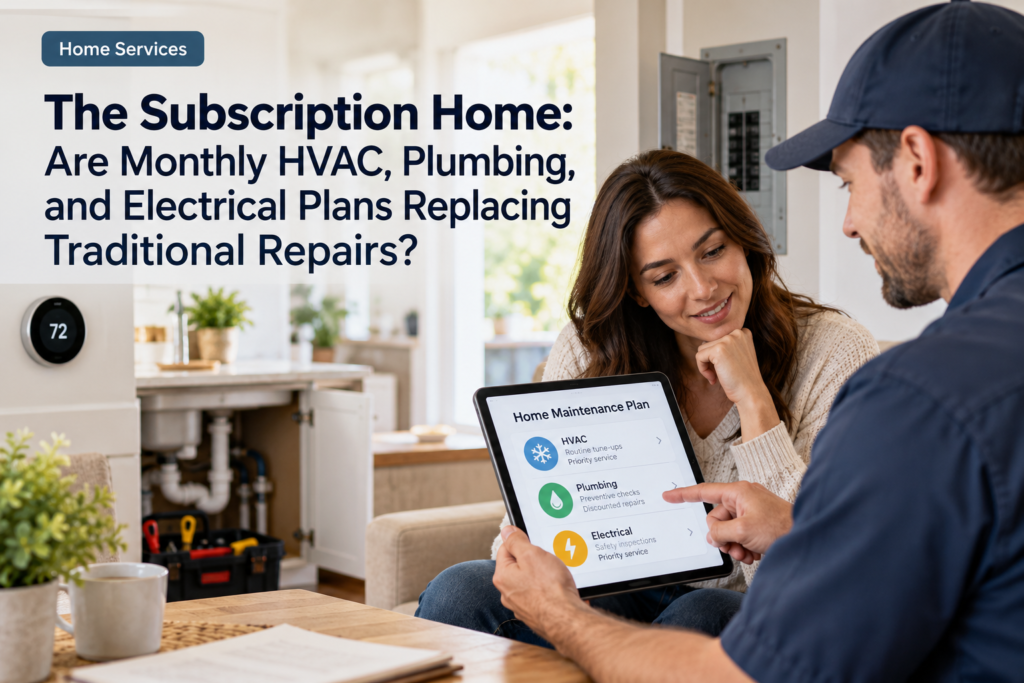
Can monthly home maintenance plans reduce unexpected household repair expenses?
Monthly home maintenance plans can reduce certain unexpected expenses by supporting preventive servicing and identifying potential problems before they become more serious.
However, they cannot eliminate repair costs or guarantee that household equipment will remain operational.
Regular HVAC maintenance, for example, can identify blocked drainage lines, loose electrical connections, and deteriorating components.
ENERGY STAR recommends professional heating and cooling system checkups before peak operating seasons to maintain performance and help prevent avoidable problems.
Similar preventive inspections can help homeowners recognize plumbing leaks or electrical issues requiring further attention.
The financial benefit depends on the services included and how frequently they are needed.
Consider a hypothetical plan costing $30 per month. The annual membership expense would reach $360.
If comparable maintenance visits would otherwise cost $400 annually, the subscription could provide modest savings. However, if the homeowner would normally spend only $200 on maintenance, the plan would cost more unless additional benefits justified the difference.
Potential financial advantages include:
- Earlier identification of equipment problems.
- Reduced costs for scheduled maintenance.
- Discounts on qualifying repairs.
- Fewer overlooked maintenance appointments.
- More predictable routine service expenses.
Nevertheless, homeowners should maintain emergency repair savings.
A subscription covering annual inspections may not pay for replacing a failed compressor, repairing a collapsed sewer line, or upgrading an unsafe electrical panel.
The greatest value often comes from combining scheduled maintenance with realistic financial planning.
What financial disadvantages can homeowners face with subscription-based repair services?
Subscription-based repair services can create unnecessary expenses when homeowners pay recurring fees for benefits they rarely use.
A relatively affordable monthly payment may appear manageable, but its cumulative annual cost deserves attention.
For example, a $45 monthly membership costs $540 annually. Over five years, that represents $2,700, excluding price increases and uncovered repairs.
Several financial disadvantages should be considered:
Limited service coverage
Plans may exclude emergency repairs, replacement components, specialized inspections, or major equipment failures.
Additional service charges
Some agreements include diagnostic fees, deductibles, or separate labor charges, even when customers maintain active memberships.
Automatic renewals
Recurring billing can continue after household needs change unless homeowners cancel according to contract requirements.
Overlapping benefits
Manufacturer warranties, existing service agreements, or other coverage may already provide similar protections.
Restricted provider choices
Certain plans require customers to use designated contractors, potentially limiting opportunities to compare repair estimates.
Uncertain savings
Households with newer systems may pay more in subscription fees than they receive in maintenance benefits.
The Federal Trade Commission advises consumers to compare service contract costs, exclusions, and existing warranty protections before purchasing additional coverage.
Homeowners should also review cancellation conditions, annual price adjustments, and whether unused services carry forward.
Comparing the total annual membership cost with independent maintenance estimates offers a clearer understanding of potential value.
Choosing a Maintenance Approach That Fits the Home
Monthly HVAC, plumbing, and electrical subscriptions offer an alternative way to organize routine property maintenance. They can simplify scheduling, encourage inspections, and make certain household expenses easier to anticipate.
However, subscription plans do not replace every traditional repair, and their financial benefits vary between properties.
Homeowners considering membership can begin by reviewing equipment age, maintenance history, existing warranties, and the complete service agreement. Comparing local maintenance prices with annual subscription costs can also reveal whether the benefits justify the commitment.
The most practical approach is one that supports reliable household systems without creating unnecessary recurring expenses.
Leave a Reply