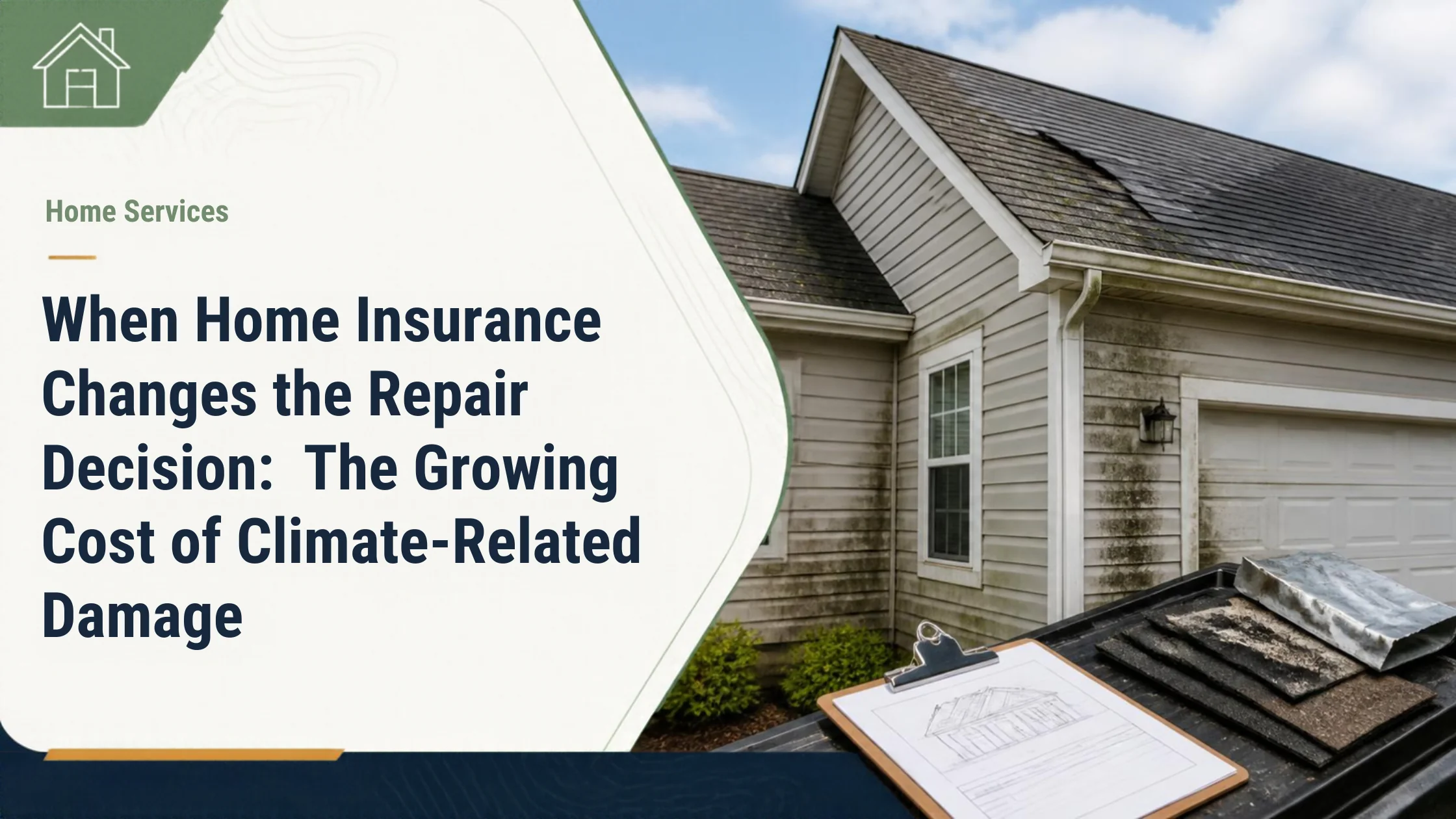
Climate-related property damage is changing how homeowners approach repairs, replacements, and insurance coverage. Severe storms, flooding, wildfires, and extreme temperatures can cause extensive damage, while rising construction costs make recovery increasingly expensive.
Home insurance traditionally helps homeowners recover from unexpected property losses. However, higher premiums, deductibles, and coverage restrictions can complicate repair decisions. Homeowners may discover that restoring damaged structures involves significant expenses beyond their insurance payments. Understanding how insurance policies respond to weather-related damage is becoming essential for making informed property decisions.
How does climate-related damage affect home insurance coverage and repair costs?
Climate-related damage can increase home repair costs by affecting multiple structural components simultaneously. Severe weather may damage roofing, siding, foundations, electrical systems, and interior materials during a single event.
According to the National Oceanic and Atmospheric Administration (NOAA), the United States experienced 27 weather and climate disasters in 2024, each causing at least $1 billion in losses. Combined damages reached approximately $182.7 billion.
These losses demonstrate how destructive weather events can place financial pressure on property owners, contractors, and insurers.
Several factors determine the actual cost of restoring a damaged home:
- Extent of structural damage: Strong winds, flooding, and falling debris can affect several building components.
- Material availability: High demand for roofing supplies, lumber, and replacement equipment can increase construction expenses.
- Labor costs: Widespread disasters can create shortages of qualified contractors and extend repair schedules.
- Building code requirements: Major reconstruction may require upgrades to meet applicable safety standards.
- Additional living expenses: Temporary accommodation may become necessary when a home is unsafe or uninhabitable.
Insurance coverage depends on the cause of damage, policy conditions, and applicable limits. Standard homeowners insurance commonly covers certain windstorms, hail, and fire damage. However, flood damage typically requires separate coverage.
Another important distinction involves replacement cost and actual cash value. Replacement cost coverage generally considers the expense of restoring damaged property with comparable materials. Actual cash value accounts for depreciation.
Consequently, two homeowners experiencing similar damage may receive substantially different insurance payments.
Why are insurance companies changing how they assess weather-related property damage?
Insurance companies are adjusting their assessment methods because severe weather presents growing financial risks. Repeated disasters can increase claim frequency, reconstruction expenses, and uncertainty about future losses.
Historically, insurers relied heavily on previous claims, property characteristics, and geographic risk classifications. Although these factors remain important, insurers increasingly incorporate detailed weather information, catastrophe models, and property-specific risk assessments.
These evaluations help estimate the likelihood and potential financial consequences of future damage.
Insurance assessments may consider several factors.
Geographic exposure
Homes in coastal communities, flood-prone neighborhoods, and wildfire-risk areas may face greater exposure to certain weather hazards. Insurers evaluate location alongside historical losses and projected risks.
Property condition
Roof age, construction materials, drainage systems, and previous damage can influence risk assessments. Properties with deteriorating components may be more vulnerable during severe weather.
Climate and catastrophe modeling
Advanced modeling systems estimate potential losses from hurricanes, wildfires, hailstorms, and other destructive events. These tools help insurers evaluate risks that may not be fully reflected in historical claims.
Repair and rebuilding expenses
Increasing material and labor costs can make individual claims more expensive. Insurers must account for these potential costs when evaluating coverage and pricing.
The result can include higher premiums, revised deductibles, additional inspections, or more restrictive underwriting requirements.
However, insurance practices differ by company, state regulations, and individual policy.
For homeowners, these changes make regular coverage reviews increasingly important. A policy purchased several years earlier may not reflect current rebuilding expenses or the property’s changing exposure to weather-related damage.
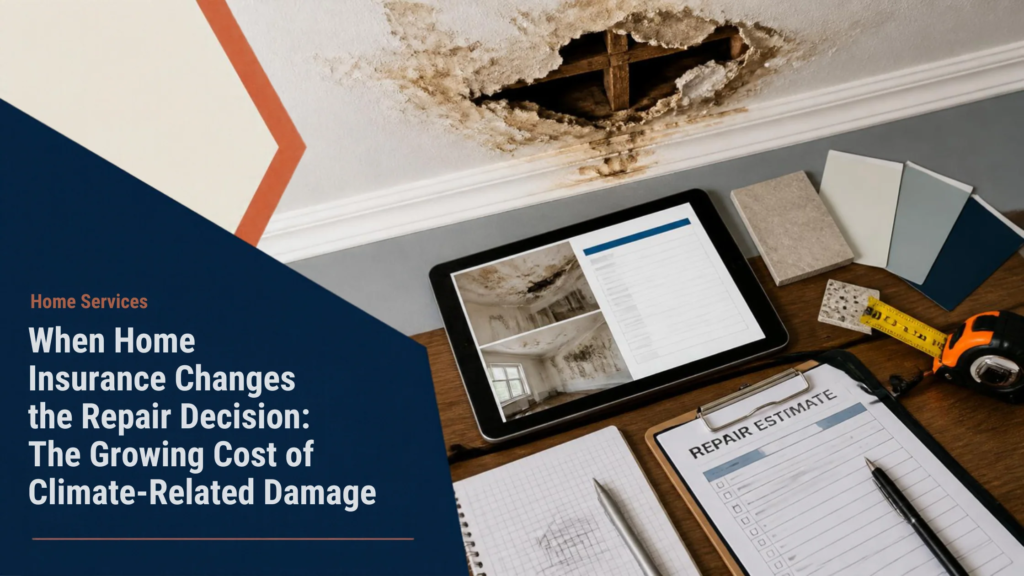
Can rising insurance premiums influence whether homeowners repair or replace damaged structures?
Rising insurance premiums can influence repair decisions by increasing the long-term cost of maintaining a home. Homeowners must consider not only immediate restoration expenses but also future insurance affordability.
After significant weather damage, repairing an existing structure may initially appear less expensive than replacing it. However, the final decision depends on structural condition, expected service life, and the likelihood of recurring damage.
For example, a storm-damaged roof may qualify for localized repairs. Yet replacing an aging roof might provide better long-term value if deterioration affects multiple sections.
Insurance considerations may further influence this comparison.
A newer roof with improved wind resistance could potentially qualify for insurance discounts, depending on the insurer and location. Conversely, retaining an older, vulnerable roof may affect future coverage availability or pricing.
Homeowners should evaluate three financial considerations before making major restoration decisions:
- Immediate expenses: Compare estimated repair and replacement costs, including deductibles and uncovered work.
- Future maintenance: Consider whether repaired components will require additional work within several years.
- Insurance implications: Ask whether proposed improvements could affect future premiums, deductibles, or eligibility for coverage.
The least expensive repair is not necessarily the most economical long-term option.
However, replacing damaged structures solely to obtain potential insurance savings may not be financially justified. Homeowners should request written estimates and confirm any available insurance incentives before committing to expensive improvements.
Structural safety, building requirements, and the condition of existing materials should remain central to the decision.
What happens when the cost of climate-related home repairs exceeds insurance coverage?
When climate-related repair costs exceed insurance coverage, homeowners generally become responsible for the uncovered difference.
This situation may arise because of policy limits, exclusions, deductibles, depreciation, or construction expenses that exceed the insurer’s approved estimate.
Consider a homeowner facing $80,000 in covered storm repairs. If the applicable coverage limit is $60,000, the homeowner may need to fund at least $20,000, with any deductible or other limitations potentially increasing that amount.
Underinsurance can create serious financial challenges, particularly when several major building systems need replacement.
Homeowners facing a coverage shortfall should review the following options:
- Examine the claim settlement: Compare the insurer’s estimate with detailed contractor assessments.
- Request clarification: Identify excluded repairs, depreciation deductions, deductibles, and policy limits.
- Document additional damage: Submit photographs, inspection findings, and supporting repair estimates when appropriate.
- Explore financial assistance: Depending on eligibility, government disaster assistance or recovery loans may help with certain uninsured expenses.
- Prioritize essential restoration: Address immediate safety concerns and structural risks before optional improvements.
An insurance payment does not automatically represent the full cost of restoring a property.
Homeowners may also need to consider mortgage obligations, temporary housing, and financing costs when determining how to proceed.
Where substantial damage remains uncovered, selling the property, undertaking phased reconstruction, or considering relocation may become part of the financial discussion.
These decisions require careful evaluation of property value, available resources, and long-term exposure to severe weather.
Making Repair Decisions With Long-Term Costs in Mind
Climate-related damage is making home restoration a broader financial decision. Insurance coverage, structural conditions, rebuilding costs, and future weather exposure all influence whether repairing or replacing damaged components makes sense.
Before approving major work, homeowners can benefit from reviewing policy documents, obtaining qualified inspections, and comparing detailed restoration estimates.
A well-informed decision considers more than the immediate insurance settlement. It also accounts for future maintenance, property safety, and the financial demands of protecting a home against changing environmental conditions.
Leave a Reply